


Air conditioning without an outdoor unit an air conditioning solution that does not require a traditional outdoor unit to be installed on the building's facade. There are two proven types: the monoblock air conditioning, which operates in a single indoor unit, and the hidden air conditioning, in which the outdoor unit is concealed inside the building in a suitable room. Both are ideal for historic buildings, downtown locations, and condominiums where outdoor units on the facade are not permitted.
If you’ve thought until now that you couldn’t install an air conditioner in your apartment because an outdoor unit can’t be mounted on the facade, this article will show you the options. We’ll look at when and why traditional split-system air conditioners aren’t allowed, what outdoor-unit-free solutions are available, how they work, what to keep in mind during installation, and what factors affect their price.
Why might you need an air conditioner without an outdoor unit?
In downtown Budapest, an increasing number of apartment owners are finding that, even though they would like to install an air conditioner, they cannot mount the outdoor unit of a traditional split-system air conditioner on the building’s facade. There are several reasons for this:
- the building historic preservation is subject to;
- local or national historic preservation regulations apply to him;
- is located in a World Heritage site or a designated urban landscape area;
- the The local government does not permit it the placement on the facade;
- a condominium owners' meeting does not consent;
- The uniform appearance of the facade must be preserved.
In these cases, a traditional split-system air conditioner really isn’t an option—but that doesn’t mean you have to give up on cooling in the summer and heating in the winter. A3Klima.hu offers two systems that were specifically designed for situations like these: the monoblock air conditioner and the concealed air conditioning system.
What types of air conditioning systems without outdoor units are available?
You can choose between two solutions that operate on fundamentally different principles. A common feature of both is that no traditional, bracket-mounted outdoor unit is visible on the facade.
| Viewpoint | Monoblock air conditioning | Hidden Air Conditioning |
|---|---|---|
| Outdoor unit | None—all components are located inside the unit | Yes, but it's hidden inside the building |
| Facade Appearance | Two aesthetically pleasing ventilation openings | Two aesthetically pleasing ventilation openings |
| Installation | Fast, clean | Requires custom design |
| Ideal location | Downtown, historic, condominium apartment | Where there is a suitable indoor space (bathroom, pantry, utility room) |
| Comfort | Cooling and Heating with a Single Unit | Full-featured split-system air conditioning |
Monoblock air conditioner – a solution without an outdoor unit
A monoblock air conditioning is the ideal choice when an outdoor unit cannot be installed on the facade at all. The entire air conditioning system in a single indoor unit It fits inside, so there's no need for a separate outdoor unit.

How does a monoblock air conditioner work?
All components—including the compressor—are located inside the indoor unit. On the outside of the wall, there is only two aesthetically pleasing ventilation openings visible, through which the unit exchanges air and removes the heat generated during cooling. There is no need for a facade bracket, long ductwork, or visible mechanical components, so the appearance of the facade remains virtually untouched.
Take a look at our air conditioning special offers and request a free on-site assessment!
The benefits of monoblock air conditioning
- There is no outdoor unit;
- no facade brackets, no visible mechanical systems;
- quick and clean installation;
- cooling and heating with a single unit;
- Ideal for downtown, historic, and condominium apartments.
Who is the monoblock air conditioner recommended for?
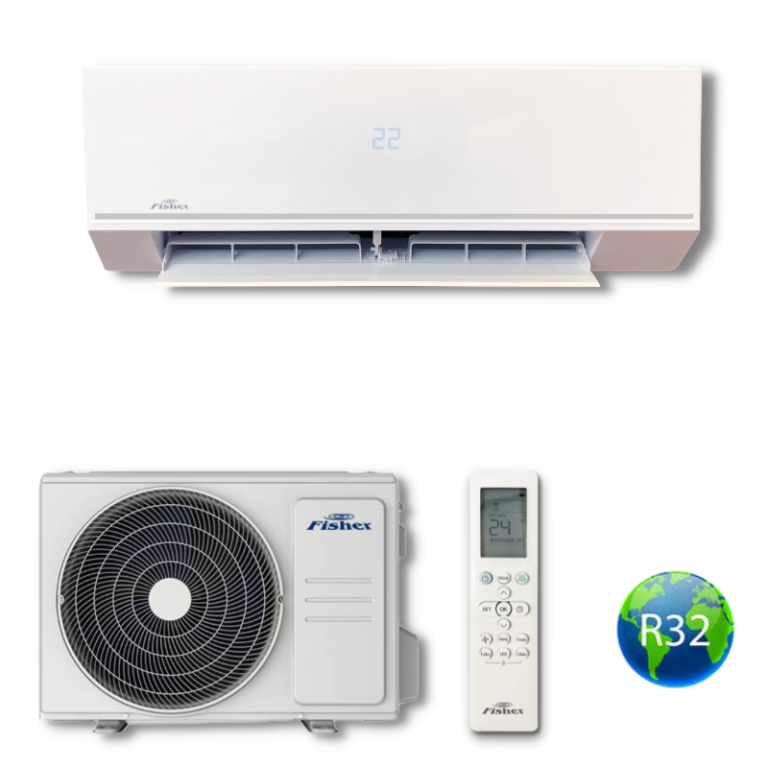
Primarily for those for whom a facade unit is simply out of the question, or who are looking for the fastest, least intrusive installation. Since the system consists of a single unit, installation is typically simpler and takes less time than that of a concealed split system. A3klima.hu Technopoint Monoblock Air Conditioners Offers: quiet operation, modern design, and reliable comfort all year round.
Hidden Air Conditioning – When the Outdoor Unit Cannot Be Installed on the Facade
A concealed air conditioner is a traditional split-system air conditioner in which the outdoor unit inside the building, we conceal it in a suitable room. This way, we get the full benefits of a split-system air conditioner, while nothing is visible from the outside. This solution is an option if the apartment has an interior space suitable for housing the outdoor unit and dissipating the generated heat.
Where can the hidden outdoor unit be installed?
- bathroom;
- pantry, storage room;
- mechanical room;
- A room adjacent to the light well.
How is the concealed outdoor unit ventilated?
The outdoor unit is installed through the wall, through two large air ducts It ventilates—one duct brings in fresh air, while the other exhausts the warmed air. The system is not visible from the outside, yet it provides full split-system air conditioning comfort. The key is proper air exchange: the outdoor unit must cool continuously, so the sizing of the room and the air ducts is critical. For this very reason, we design every concealed system individually, in compliance with the manufacturer’s specifications and taking the building’s characteristics into account.
Monoblock or concealed air conditioner—which one should I choose?
The choice depends primarily on the property's characteristics, not just on personal taste. Here are a few guidelines to help you decide:
- Is there no suitable indoor space for the outdoor unit? In such cases, a monoblock air conditioner is the obvious solution, since it doesn't require a separate space.
- Is there a usable bathroom, storage room, or utility room? In this case, the concealed split system provides full split-system comfort and can be expanded to cool multiple rooms.
- Are you looking for the fastest, least intrusive installation? A monoblock is generally a simpler design.
- Are you looking to cool a larger area or multiple rooms? A concealed split system is typically more scalable.
The final decision is always based on an on-site assessment—often, it is only on site that it becomes clear which solution can be implemented safely and reliably over the long term.
Air Conditioning Installation in Light Courts and Attics – What You Need to Know
Can a split-system air conditioner be installed in the atrium?
Only if there is adequate air circulation. In a poorly ventilated atrium, the outdoor unit may overheat, efficiency may decline, malfunctions may occur, and it may even result in the loss of the warranty. In enclosed, narrow courtyards, warm air becomes trapped, causing the outdoor unit to „recycle” the heat it generates. In all cases, a decision on whether a lichthof is suitable for installation must be made based on the manufacturer’s specifications and on-site conditions.
Attic: Often, this is the only option
In the summer, the temperature in the attic can easily exceed 50–60 °C. In contrast, the maximum operating temperature of the outdoor units of most split-system air conditioners is typically 50–55 °C. This means that an outdoor unit simply placed in the attic may operate at or beyond its operational limits on the hottest summer days, which can lead to reduced performance and malfunctions. Therefore, it is essential to assess ventilation, heat load, and the air conditioner’s suitability for such an environment—in many cases, additional ventilation or careful placement is required.
Draining condensation is just as important as the air conditioner itself
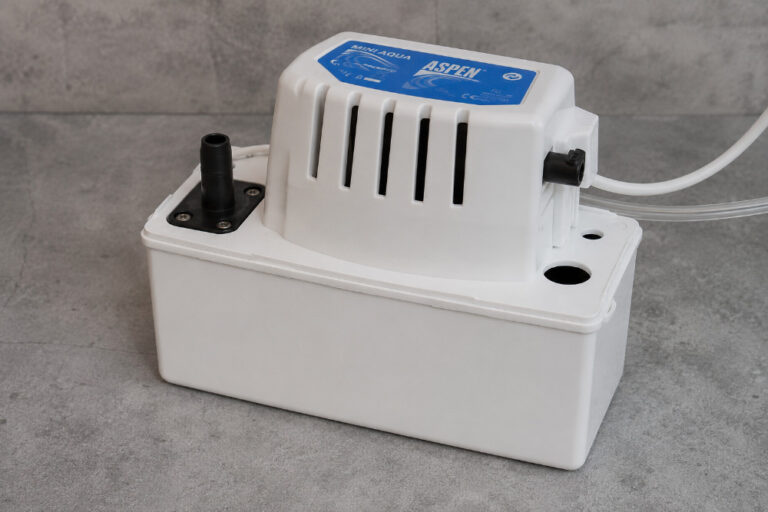
One air conditioner per day several liters of condensate It can also produce water. In systems without an outdoor unit, this water cannot drain onto the building’s facade, so it must be drained indoors. If this is not handled properly, water may drip onto the sidewalk, onto cars parked below, or cause moisture damage inside the apartment—which can lead to conflicts within the condominium association and disputes over compensation.
The solution is a special condensate pump, which allows condensate to be drained into the sewer, the sink drain, or a floor drain even without a slope.
We design and install the entire condensate drainage system, ensuring that water does not drip onto the facade, the sidewalk, or cars.
How Does the Installation Work? – Step by Step
An air conditioning system without an outdoor unit is never selected „from a catalog,” but is designed specifically for the property in question. The process typically consists of the following steps:
- On-site survey. We assess the property's characteristics, possible locations, and ventilation and condensate drainage conditions.
- Expert design. Based on the assessment, we select the appropriate solution (monoblock or concealed) and create a custom design in accordance with the manufacturer’s specifications.
- Selecting a premium solution. We recommend appliances that are suited to the size of your rooms and your needs.
- Full-scale construction. From installation to condensate drainage to commissioning, everything is handled by a single provider.
- Reliable operation. We are delivering a system that will operate safely over the long term.
What factors determine the price of an air conditioner without an outdoor unit?
An accurate price can only be provided responsibly after an on-site assessment, as the final cost is determined by a combination of factors. The price is typically influenced by:
- the type of system chosen (monoblock or concealed split);
- the number and size of the rooms to be air-conditioned;
- the type and power rating of the appliance;
- the complexity of condensate drainage;
- the extent of the necessary wall demolition, ductwork installation, and restoration;
- the property's specific characteristics (e.g., wall thickness, accessibility).
That is precisely why it’s worth requesting an appraisal: this way, you’ll receive a realistic offer tailored to the value of your property, rather than a general price that could end up differing significantly from reality.
Common Misconceptions About Air Conditioners Without Outdoor Units
- „This definitely isn't cooling enough.” The monoblock air conditioner is suitable for both cooling and heating, while the concealed split system provides all the comfort of a traditional split system, as it is, in fact, a conventional split air conditioner.
- „If an outdoor unit isn’t an option, then there’s no solution.” Monoblock and concealed air conditioners are designed specifically for these situations.
- „The condensation will just drip down the facade anyway.” A condensate pump ensures that water is properly drained indoors.
- „Any solution can be used anywhere.” No: The appropriate system always depends on the building's specific characteristics, which is why an on-site assessment is necessary.
Frequently Asked Questions About Air Conditioners Without an Outdoor Unit
An air conditioner without an outdoor unit is a type of air conditioner that does not have a traditional outdoor unit mounted on the building’s facade. There are two types: monoblock air conditioners (all components are housed in a single indoor unit) and concealed air conditioners (the outdoor unit is hidden inside the building).
Yes. The monoblock air conditioner is suitable for both cooling and heating, while the concealed split system provides the full comfort of a split air conditioner, since it is essentially a traditional split system—only the outdoor unit is concealed inside the building.
They offer a solution specifically for situations where an outdoor unit on the building facade is not permitted—for example, due to historic preservation regulations or restrictions imposed by local authorities or homeowners’ associations. It is advisable to clarify the specific conditions in each case based on an on-site assessment.
Indoors, we use a condensate pump to drain the condensate into the sewer, a sink drain, or a floor drain—even without a slope—so that water does not drip onto the facade.
The price depends on several factors: the chosen solution, the number and size of the rooms, the type of unit, the complexity of the condensate drainage system, and the specific characteristics of the property. We can provide an accurate, realistic price quote after conducting an on-site survey.
Yes, in most downtown, historic, and condominium apartments—but the right solution always depends on the building’s specific characteristics. That’s why we always conduct an on-site assessment and recommend only solutions that will operate safely and reliably in the long term.


 English