


Split air conditioning is one of the most common and reliable air conditioning solutions used in homes, offices and commercial premises. Although at first glance many people may refer to it as just "air conditioning", it is in fact a technological system that forms the basis of today's modern cooling and heating solutions. Its popularity is no coincidence: quiet, energy efficient, comfortable and flexible. Yet its operation is often misunderstood or not well understood. So in this article, we'll explain what makes split air conditioning so effective, how it's built, why it's beneficial, and in what situations it's the best choice.
What exactly is split air conditioning?
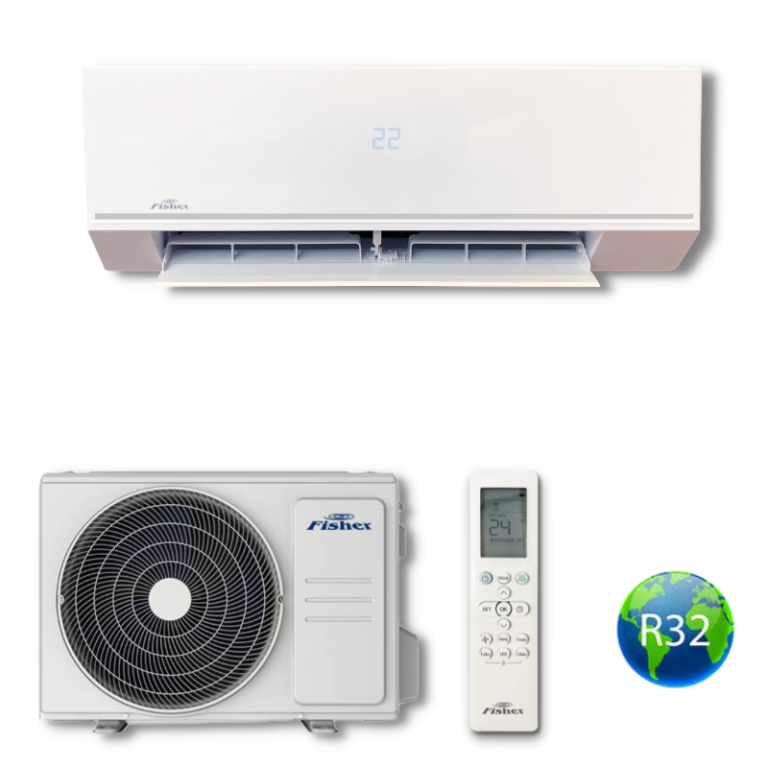
A split air conditioner is an air conditioning system that is divided into two units: indoor and outdoor. The word "split" also refers to this: separated. This design allows the air conditioner to be much more efficient and quieter than old window air conditioners or noisy mobile air conditioners.

Two main parts:
- Indoor unit - located in the room, visible, aesthetic, usually wall mounted.
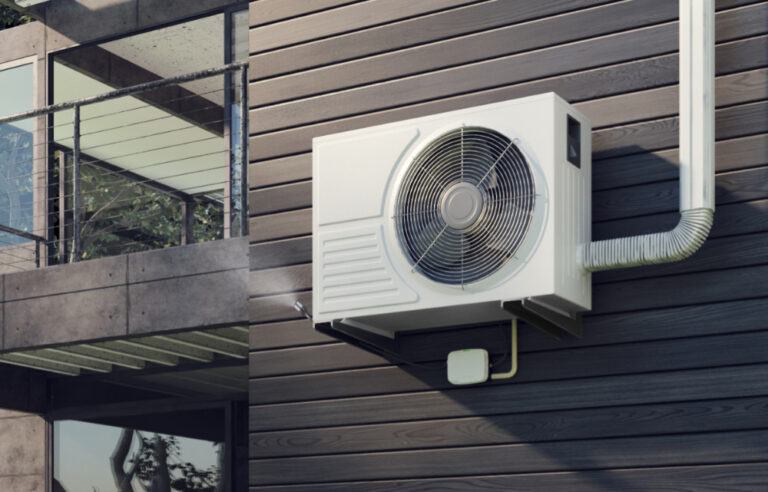
- Outdoor unit - located on the wall, balcony, roof or plinth of the house, this contains the compressor and most of the heat dissipation system.
Copper pipes run between the two units, through which the air-conditioning refrigerant flows continuously. These ensure the exchange of heat between the inside and the outside. The system is closed, so the refrigerant does not run out or evaporate, but circulates continuously throughout the system.
The name "split air conditioner" does not refer to a brand or type, but to the construction of the system.
The split air conditioner design: much more than two boxes on the wall
Split air conditioning is a much more complex technology than most people think. It's not just a "box that blows cold air", but a complete engineering system.
Main parts of the indoor unit:
- evaporative heat exchanger
- fan
- air filters (coarse filter, fine filter, antibacterial filter, etc.)
- air deflector blades
- electronic control panel
- temperature sensors
- condensate tray and drip tray
Main parts of the outdoor unit:
- compressor (the "heart" of the system)
- condenser heat exchanger
- outdoor fan
- expansion valve or capillary tube
- noise attenuating elements
- vibration dampers
- refrigerant connections
In the operation of the air conditioner, the two units work in close cooperation, with each component playing a precise role.
Take a look at our air conditioning deals and request a free on-site assessment!
Why is it an advantage to have the compressor outside?
The compressor is the noisiest and most energy-intensive part of the air conditioner. In the old window air conditioners, it was inside the room, which is why they were noisy. But with a split air conditioner, the outdoor unit contains this part, so the indoor unit moves almost nothing but air - so it's quiet and comfortable.
How does a split air conditioner work? The simplest explanation of a complicated process
The split air conditioner works by a physics-based cooling cycle. The best known consists of four steps:
- Compression
- Condensation
- Expansion
- Evaporation
But it is much clearer if we put it like this:
cools the air by "pumping" heat from the room to the outside.
Short and clear:
- The indoor unit draws heat from the air in the room.
- The heat escapes with the refrigerant to the outside.
- The outdoor unit releases this heat into the air.
- The cooled refrigerant returns to the indoor unit and again draws the heat away.
This cycle continues as long as the air conditioner is working.
What exactly happens during cooling?
- The evaporator coil cools down because the refrigerant evaporates here.
- The fan pushes air across this cold surface.
- The air temperature drops and the humidity decreases.
What happens when heating?
A split air conditioner works as a heat pump, i.e:
removes heat from the outdoor air and transfers it indoors.
This works even when it's cold outside. Modern split air conditioners can extract heat from the air outside at temperatures as low as -15°C.
This technology is much more energy efficient than electric heating panels or convectors.
Why is an inverter split air conditioner more efficient?
The biggest advantage of an inverter air conditioner is that the speed of the compressor is continuously controlled.
What does this mean in practice?
- does not turn on and off all the time like the old air conditioners
- always use the power you need
- consumes less electricity
- maintains a constant temperature
- much quieter
The inverter air conditioner consumes up to 30-40% less energy than conventional versions.
The main benefits are:
- longer lifetime
- stable temperature
- quieter operation
- lower maintenance requirements
- faster heating and cooling
The inverter is now a key technology in split air conditioners.
What are the advantages of split air conditioning compared to other solutions?
It clearly outperforms mobile air conditioning, window air conditioning and electric heating solutions.
The main advantages of split air conditioning:
- Quiet operation
- Extremely energy efficient
- Suitable for both cooling and heating
- Cleans the air
- Unzip
- Aesthetic indoor unit
- Up to 10-12 years of reliable operation
- Low maintenance costs
- Easy to automate (Wi-Fi, smart control)
- Can be used all year round
A split air conditioner is therefore not just a cooling system, but a complete comfort technology.
Where to install a split air conditioner?
A split air conditioner is ideal for any room where silence, efficiency and a stable temperature are important.
Most commonly installed premises:
- living room
- bedroom
- children's room
- study
- offices
- attic rooms
Installation considerations:
- the airflow should not be directed directly at people
- be at an appropriate distance from the ceiling
- condensation drainage must be provided
- the outdoor unit should not be completely enclosed
- do not obstruct the airflow
Improper installation of the air conditioner can reduce efficiency, so it is crucial to involve a professional.
What split air conditioner performance should you choose?
Choosing the right split air conditioner performance is key to efficient and economical operation. Incorrect sizing will lead to either excessive consumption or poor cooling/heating performance.
As a general rule: Approx. 1 kW cooling capacity required per 10 m².
But it should be taken into account when determining performance:
- the floor area of the room
- the ceiling height
- the size and orientation of windows
- the quality of the insulation
- electronic equipment on the premises
- the number of people staying
General performance recommendations:
|
Room size |
Recommended split air conditioning capacity |
|---|---|
|
10-20 m² |
2,5 kW |
|
20-35 m² |
3,5 kW |
|
35-50 m² |
5,0 kW |
|
50-70 m² |
7,0 kW |
|
Over 70 m² |
individual design or multi split system |
If the customer is unsure, it is always better to choose a slightly more powerful split air conditioner, because the inverter technology regulates itself downwards, so it does not consume more.
Energy efficiency - reporting SEER and SCOP values
Two key values are found in split air conditioners:
- SEER - Seasonal Energy Efficiency Ratio (cooling efficiency)
- SCOP - Seasonal Coefficient of Performance (heating efficiency)
The higher the value, the less the air conditioner consumes.
SEER value (cooling):
- Above 5.0 is considered good
- Between 6.0-7.0 very good
- Energy efficiency above 7.0
SCOP value (heating):
- Between 3.8 and 4.0 good
- Between 4.0-4.6 very good
- Above 4.6 outstanding efficiency
Split air conditioners with high SEER and SCOP will significantly reduce your electricity bill, especially if they are also used for heating.
The main modes and functions of a split air conditioner
A split air conditioner is now a complex, versatile appliance, not just a refrigerator. Modern models offer a wide range of settings and automated functions.
Basic modes:
- Cooling mode - for summer use
- Heating mode - winter heat pump plant
- Padding mode - in rainy, humid weather
- Fan mode - without temperature change
- Automatic mode - the air conditioner automatically selects the operating mode
Useful extra features:
- Wi-Fi control
The split air conditioner can also be controlled remotely from a mobile phone. - Night mode
Quiet operation and comfortable temperature. - 3D air design
It can move air from the top, bottom and side. - Self-cleaning function
Prevents mould growth, bacteria. - Ionizer
Binds pollutants, pollen, dust. - Protection against cold air
Blows warm air when heating, not cold air when starting. - Timing
Convenient adjustment to your daily routine.
These features significantly increase the comfort and efficiency of your split air conditioner.
How to clean and maintain your split air conditioner?
Air conditioning maintenance is not complicated, but it requires regularity. A well maintained air conditioner is more economical, lasts longer and is more hygienic.
There are three levels of maintenance:
1. Cleaning by the user:
- monthly cleaning of filters
- dusting of the front panel of the indoor unit
- replacement of the remote control batteries
2. Annual professional cleaning:
- disinfection
- checking the refrigerant pressure
- outdoor unit cleaning
- flushing the drip water drainage system
3. Special maintenance:
- if you notice a strange smell, reduced performance or noise
- recommended once a year
What happens if the air conditioner is not cleaned?
- inefficiency
- consumption is growing
- polluted air is introduced into the room
- unpleasant odour
- the equipment may fail
Maintenance of your split air conditioner is not only recommended, it is also a condition of the warranty.
How reliable is a split air conditioner? What makes a good unit?
The reliability of air conditioning depends on three things:
- the quality of the device
- professional installation
- regular maintenance
Characteristics of a good split air conditioner:
- inverter technology
- high SEER and SCOP
- quiet operation
- durable compressor (Twin Rotary or DC Inverter preferred)
- at least 3-5 years guarantee
- good filter system
- real heating capacity even in winter
- trusted brand background
A good air conditioner can run for up to 10-15 years without problems.
Who is a split air conditioner recommended for?
In fact, it is recommended for anyone who wants to cool or heat their home economically. But it is particularly ideal for:
- for families with young children
- for allergy sufferers
- for people living in panel flats
- offices
- attic apartments
- for those looking for energy efficient heating
It is particularly recommended for those who want a solution that can be used all year round.
The advantages of split air conditioning for heating
Few people know, but split air conditioning also an excellent solution for heating. Heat pump technology can be significantly more efficient than electric heating panels.
Why is it worth heating with split air conditioning?
- can be up to 3-4 times more efficient than electric heating
- provides warmth quickly, in minutes
- precise temperature control
- low consumption
- modern models operate stably at temperatures as low as -15 °C
The split air-conditioning heating system is already replacing gas heating in many homes.
Split air conditioner types comparison table
|
Type |
Benefit |
Disadvantage |
Recommended use |
|---|---|---|---|
|
Sidebar |
cheap, efficient, quiet |
wall mounting only |
apartment, office |
|
Parapet |
can be placed low |
more expensive |
attic, lack of space |
|
Cassette |
can be built into suspended ceilings, aesthetic |
office only, more expensive |
large spaces |
|
Multi split air conditioning |
several rooms with one outdoor space |
higher investment |
air conditioning in several rooms |
Summary
The two-unit air conditioning system is now one of the most popular solutions for cooling and heating homes, offices and private houses. Its quiet operation, high energy efficiency and versatile functions make it not only comfortable but also economical. The right choice of performance, inverter technology and regular maintenance ensure stable operation over the long term. Modern models not only cool, but also heat, dehumidify, purify the air and can even be controlled from a smartphone, ensuring a comfortable and healthy indoor climate all year round.

 English