


Parapet air conditioning is an increasingly popular solution in places where the installation of a traditional wall split system is either difficult or simply does not provide adequate air distribution. Although less well known than the classic high-wall indoor units, actually has many advantages - especially in prefabricated apartments, attics and rooms where there is not enough wall space for the usual installation.
In this article, we'll go into detail about what this type can do, how it works, where it should be installed, and when it's a better choice than traditional solutions.
What is parapet air conditioning and how does it differ from conventional split systems?
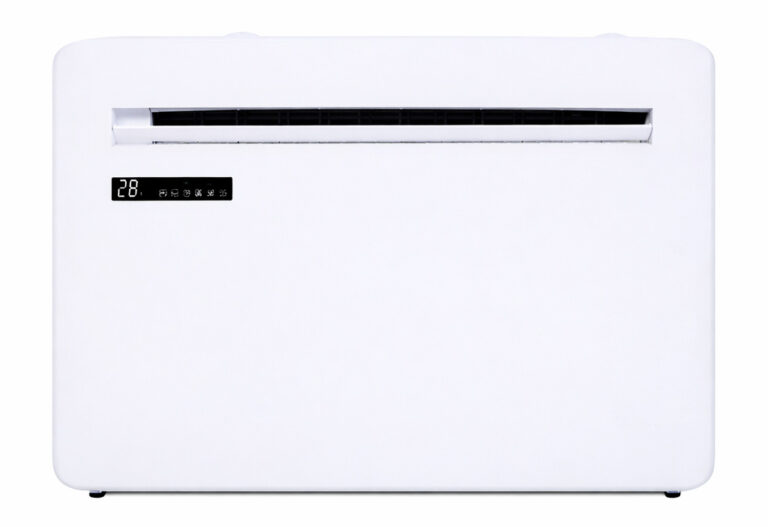
A parapet air conditioner is a split system with a specially designed indoor unit, which for lower wall surface, close to floor level or in place of radiator can be installed. It looks very much like a modern convector or electric heating panel, but it is a full-fledged air conditioner in operation.

The main differences compared to the classic wall air conditioner:
- Location: works at low height, not under the ceiling.
- Airflow: it distributes air more evenly and gently throughout the room.
- Aesthetic impact: a less ostentatious, more elegant shape, more in harmony with the furniture.
- Installation options: can also be used where the wall would not support the top placement (e.g. plasterboard partition).
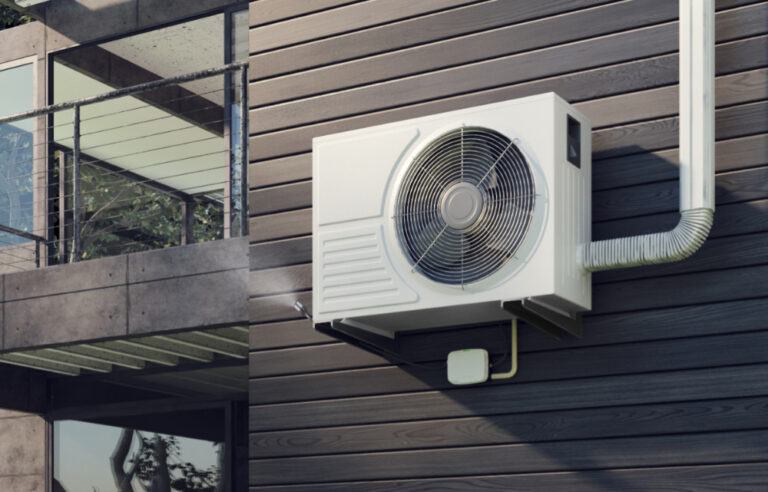
The design of the system is the same as a classic split air conditioner: there is an outdoor unit, piping and electrical connection, only the indoor form and function is different.
Where to install a parapet air conditioner?
One of the biggest advantages of the parapet system is that it offers a solution in places where other types are difficult or impossible to install.
Typical uses:
- Panel flats, where there is little free wall space
- Attic, with sloping walls or low ceilings
- Nappalik, where they do not want a high ceiling for aesthetic reasons
- Plasterboard partition rooms, where the wall load-bearing capacity is not sufficient for a wall unit
- For heating replacement, where previously there was a radiator, and the parapet air conditioner is in place
- Large rooms, where the lower airflow provides a more favourable and uniform heat distribution
This solution is therefore not only an alternative, but in many cases the only optimal choice.
Take a look at our air conditioning special offers and request an on-site assessment!
The principle of parapet air conditioning is simple
The operation of a parapet air conditioner is based on the same principle as any modern split system: the circulation of the refrigerant creates the cooling or heating effect. The difference lies in the direction of airflow and the comfort of the unit.
How does the air circulate?
The unit draws in air from the room at the bottom and blows it out at the top or front. This creates a stable, natural air movement that feels less draughty than a wall-mounted air conditioner mounted high up.
Why is this beneficial?
- The low-pressure air blends better, so there is no cold spot or hot draught.
- It is particularly effective for heating, as the rising warm air quickly produces a uniform temperature in the room.
- In children's rooms and bedrooms, it is more comfortable because the airflow is not directed directly at you.
This type of distribution is closer to the pleasant effect of underfloor heating, which makes it very practical in many homes.
Benefits: when is a better choice than a wall air conditioner?
The parapet design is not the best in all situations, but there are times when it clearly offers more than traditional indoor units.
Key benefits:
- Optimal air distribution
The air flow is more natural, more even and less disturbing. - Excellent heating efficiency
In heating mode, it provides a much more efficient feeling of comfort than high-mounted appliances. - Can be installed in place of a radiator
If you are converting to heat pump heating or want supplementary heating, this is the ideal solution. - Aesthetic, furniture-friendly shape
It fits well in any modern home and is less "showy" than a classic air conditioner. - Flexible placement for weak load-bearing walls
It can be installed where a wall air conditioner cannot. - Very quiet operation due to bottom airflow
Because it does not have to blow air over long distances, it is often quieter.
Disadvantages and limitations to be taken into account
Parapet air conditioning is not a perfect solution in all cases. There are some aspects to consider before installation.
The main disadvantages:
- Takes up more space at the bottom of the roomthan a wall-mounted indoor.
- For heavy furniture: should avoid being obscured by a wardrobe or sofa.
- Higher price may bethan a standard indoor unit.
- Installing more specific, so you need a mechanic who is familiar with the type.
- Piping often needs to be routed over a longer distanceif there is no external wall nearby.
However, in many homes it is still the most convenient solution, especially where traditional placement is technically impeded.
For which rooms is it best recommended?
Parapet air conditioning shows its real advantage where, for some structural or aesthetic reason, the wall unit would be poorly located.
The most typical rooms:
- Attic with sloping walls
- Narrow panel flats, where the top of the wall is full of pipes, boxes, furniture
- Children's rooms, where uniform temperature and draught-free operation are important
- Larger living rooms, where the bottom blow is preferable for air distribution
- Bedrooms and study rooms, where quieter operation matters
- Old radiator location, if someone switches to a more modern heating solution
In such an environment, a parapet is often not only a possible alternative, but also a best option.
Parapet air conditioner performance and sizing - how to choose the right model?
For a parapet air conditioner to be truly efficient, choosing the right performance is key. A unit that is too small will constantly run at high speeds, which will increase consumption and reduce lifetime. And a machine that is too large will cycle on and off quickly, so the temperature will not be even and will be uncomfortable to operate.
Sizing principles:
- 10-20 m² room: 2,5 kW
- 20-35 m²: 3,5 kW
- 35-55 m²: 5,0-5,3 kW
- Over 55 m²: 7 kW or more
For parapet models, it is also important to where the indoor unit is located, because the lower airflow in some rooms means that less power may be enough to achieve optimum comfort.
What to look out for when sizing?
- the quality of thermal insulation
- window area size and orientation
- the ceiling height of the room
- whether you also use it for heating (it counts in winter)
- heat production of the appliances in the room
- you want to supply one or more rooms
If you're looking for both cooling and heating, you should choose a more modern model with a high SCOP, which is also efficient in winter.
Installation steps: how to install a parapet air conditioner
The installation of a parapet air conditioner is very similar to a classic split system, but differs in a few details due to the special indoor unit.
The installation process usually looks like this:
- Choosing a place - preferably near an external wall, a radiator or a place where air circulation can be ensured.
- Mounting the support bracket - the specific indoor design of the parapet requires stable, accurate fixing.
- Drilling through the wall - for pipes and cables.
- Outdoor unit placement - on the ground, roof, facade or balcony, depending on the permits.
- Pipe and electrical cable pulling - copper pipes with insulation, drip water drainage.
- Vacuum and pressure test - these ensure that the system works perfectly.
- Refrigerant opening and test run - the installer measures all important parameters.
- Setup and remote control settings
The installation period is usually 3-4 hours, but it can be done more quickly by replacing an old radiator.
Noise, energy efficiency and operation
The noise level of parapet units is similar to that of wall air conditioners, but because they are closer to the floor, the sound experience often seems quieter. Modern inverter models are almost imperceptible in night mode.
Energy efficiency: what can you expect?
Most parapets have air conditioning:
- A++ or A+++ in energy class cooling
- A+ or A++ in energy class heating
It affects efficiency:
- compressor type (twin-rotary → quieter and more economical)
- insulation of the equipment
- the fan speed
- the quality of the installation
- the regularity of maintenance
Because the bottom blowing makes the temperature uniform more quickly, often consumes lessthan a wall indoors under the same conditions.
2026 best parapet air conditioner brands - Midea, Gree, Polar
The parapet type is not offered by all manufacturers, but some brands offer outstanding quality in this category. The following three manufacturers offer reliable, efficient and value for money products.
1. Midea parapet air conditioners
Midea is one of the world's largest manufacturers with advanced inverter technology.
Benefits:
- very quiet operation
- outstanding energy efficiency
- wide range of models
- modern design
Many homeowners choose it because of its technical content and price range.
2. Gree parapet air conditioners
Gree is one of the world's largest manufacturers, known for its reliability.
Benefits:
- durable compressors
- stable heating performance
- operable over a wide temperature range
- very good value for money
One of the most popular brands among installers.
3. Polar parapet air conditioners
The Polar brand offers surprisingly good technical content in the lower price range.
Benefits:
- cost-effective solution
- reliable basic functions
- ideal for smaller rooms
- also works well for heating
If you want good quality at an affordable price, this brand is a good alternative.
Parapet air conditioning maintenance - what to look out for?
Annual maintenance is essential for long life and low consumption. For this type of parapet, it is particularly important to remove dust and flying lint from the area around the lower intake.
Annual tasks:
- cleaning or replacing filters
- disinfection of the heat exchanger
- checking the drainage of condensation water
- outdoor unit cleaning (leaves, dust, bugs)
- checking pressure values
Regular maintenance increases efficiency and reduces the chance of failure.
Prices, installation costs and return on investment
The price of a parapet air conditioner depends on the performance, brand and equipment. In general:
General prices (2026):
- Price of the device: 350 000 - 600 000 Ft
- Installation: 100 000 - 200 000 Ft
- Extra piping / extension: 6 000 - 10 000 Ft/m
Overall, the total cost of an average installation:
Between 450 000 - 750 000 HUF moves.
Retrieval
If you also use it for heating, the payback is significantly faster because it is significantly cheaper to run than conventional heating methods.
Parapet air conditioner vs. wall split air conditioner - comparison table
|
Viewpoint |
Parapet air conditioning |
Wall mounted split air conditioner |
|---|---|---|
|
Location |
Radiator in place, lower |
High, on top of the wall |
|
Airflow |
Even, natural |
Stronger, more controlled |
|
Heating efficiency |
Excellent |
Good |
|
Aesthetics |
Furniture-like appearance |
More spectacular indoors |
|
Installation details |
Also beneficial for plasterboard walls |
Capacity required |
|
Noise level |
Often quieter |
Medium |
|
Price |
Slightly higher |
More favourable |
|
Best rooms |
Attic, panel apartment, living room |
Almost anywhere |
Summary: Who is parapet air conditioning recommended for?
A parapet air conditioner is the ideal choice wherever the installation of a conventional wall-mounted indoor unit is not ideal or is difficult. It is an excellent solution for loft spaces, panelled flats, children's rooms, large living rooms and any other space where even heat and quiet operation are important. It is particularly suitable for heating, as the air is blown in from below, providing a quick and pleasant comfort.
If you are looking for an aesthetic, efficient and modern climate solution, the parapet type is one of the best alternatives.

 English