


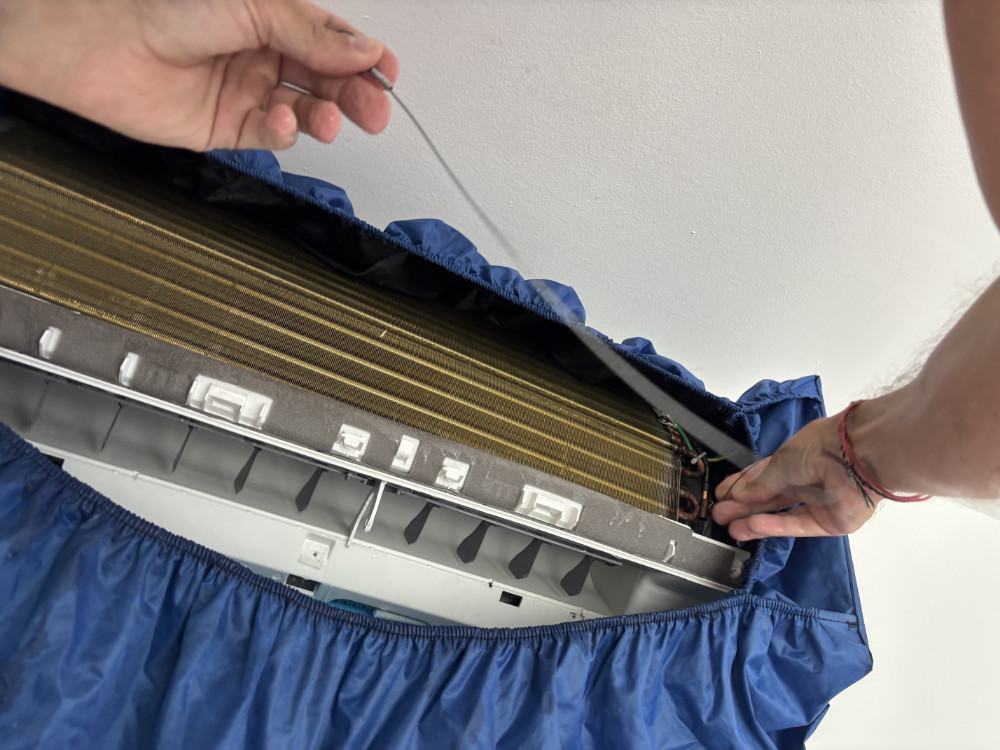
A Air Conditioning Cleaning A deep-cleaning process using a washing bag, in which a watertight bag secured around the indoor unit collects the applied cleaning solution and the rinsed-off dirt, allowing us to thoroughly clean the heat exchanger and fan without having to remove the wall-mounted unit.
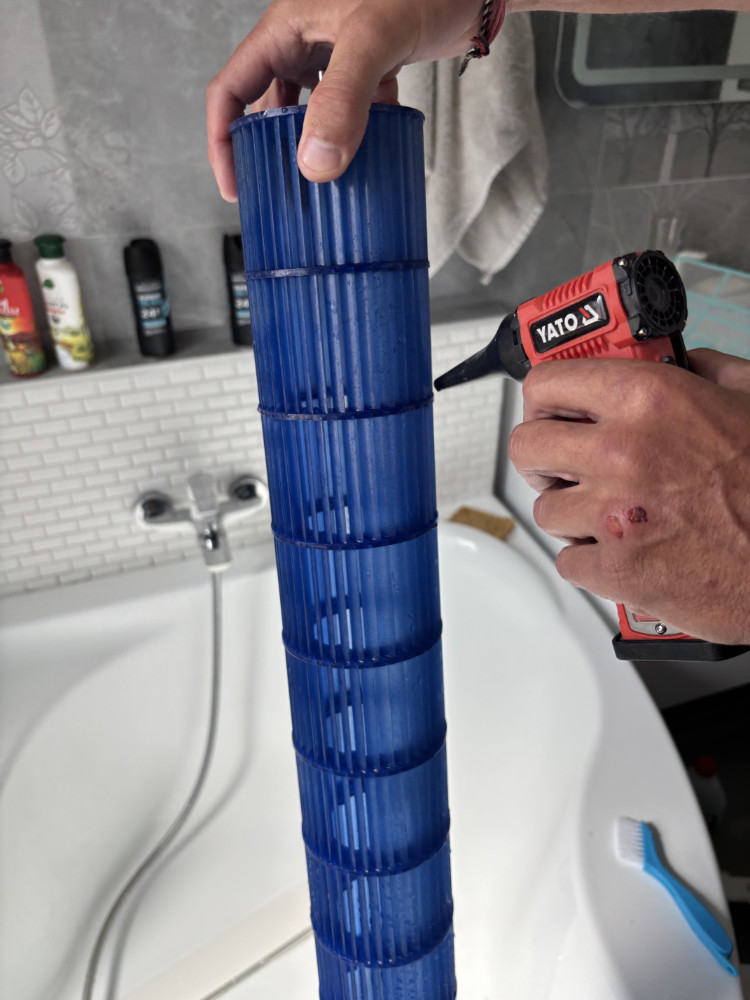
This method allows us to reach places that simple filter cleaning cannot: between the fins and inside the fan’s openings, where mold, bacteria, and biofilm accumulate the most. It’s important to know that for a truly thorough job, in many cases we also need to remove the fan assembly (the centrifugal fan): in which case we remove it, wash it separately, and dry it, because otherwise it’s impossible to completely remove the buildup from between the blades. Below, we’ll walk you through the process, cover the outdoor unit, outline the decision-making criteria, discuss the factors that influence price, address the most common misconceptions, and finally answer your most important questions.
What is the essence of chemical air conditioner cleaning using a wash bag?
The key to cleaning an air conditioner using a wash bag is to secure a waterproof collection bag around the indoor wall-mounted split unit, with its drain hose leading into a bucket or down the drain. Next, we apply the cleaning and disinfecting solution to the heat exchanger fins and fan on this protected surface, let it sit, and then rinse it off with pressurized water. The bag catches the runoff and contaminated liquid, so the walls, furniture, and floor won’t get dirty, and there’s no need to remove the wall-mounted unit.
During a chemical air conditioning cleaning, we typically thoroughly clean the following parts:
- the evaporator (the finned heat exchanger), where deposits form due to dust and moisture,
- the centrifugal fan (turbine), whose blades are coated with sticky debris,
- the condensation tray and the drain channel, where clogs and odors can develop,
- the interior, hard-to-reach surfaces of the cladding.
Why isn't cleaning the filter enough?
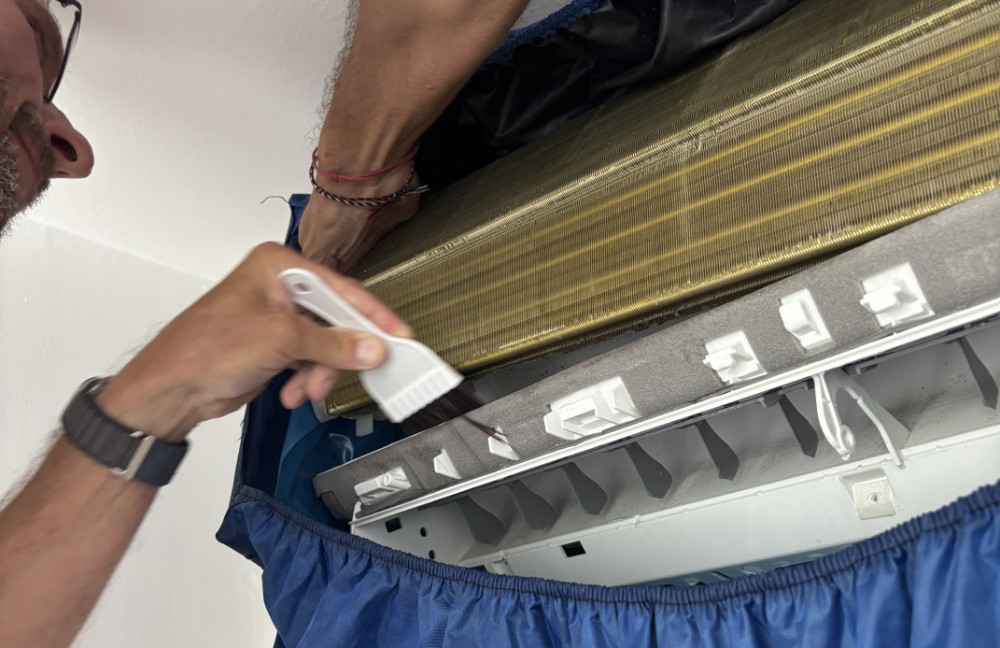
Cleaning the dust filter is important, but it only affects the surface. The filter traps coarser dust, but fine particles, moisture, and organic deposits pass through it and accumulate between the fins and on the fan. This is where a damp, nutrient-rich layer forms, in which mold and bacteria thrive. This layer cannot be removed by hand or with a vacuum cleaner, which is why we perform chemical air conditioning cleaning.
Symptoms that filter cleaning does not resolve: a musty, sour odor when the unit is turned on, reduced airflow, slower cooling or heating, and worsening allergy symptoms. These issues are almost always caused by dirt buildup on the heat exchanger and fan.
What is the step-by-step process for cleaning an air conditioner with chemicals?
We perform professional air conditioner cleaning using a wash bag in clearly defined steps:
- Power Outage. Unplug the appliance from the electrical outlet before cleaning it.
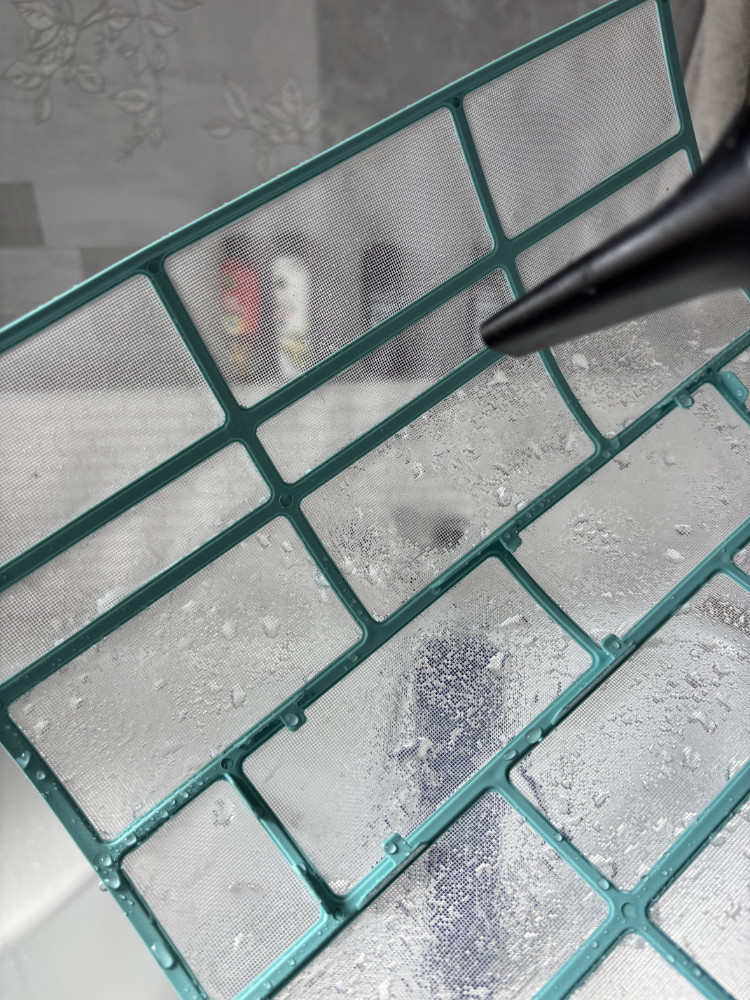
- Disassembly and removal of filters. Open the cover, remove the dust filters, and clean them separately.
- Remove the fan impeller, if necessary. If a machine is heavily contaminated, it is often necessary to remove the cylinder fan: in such cases, we take it out, wash it separately, and dry it to ensure that all deposits are completely removed from the blades.
- Putting on the laundry bag. Secure the collection bag around the indoor unit and adjust the drain hose.
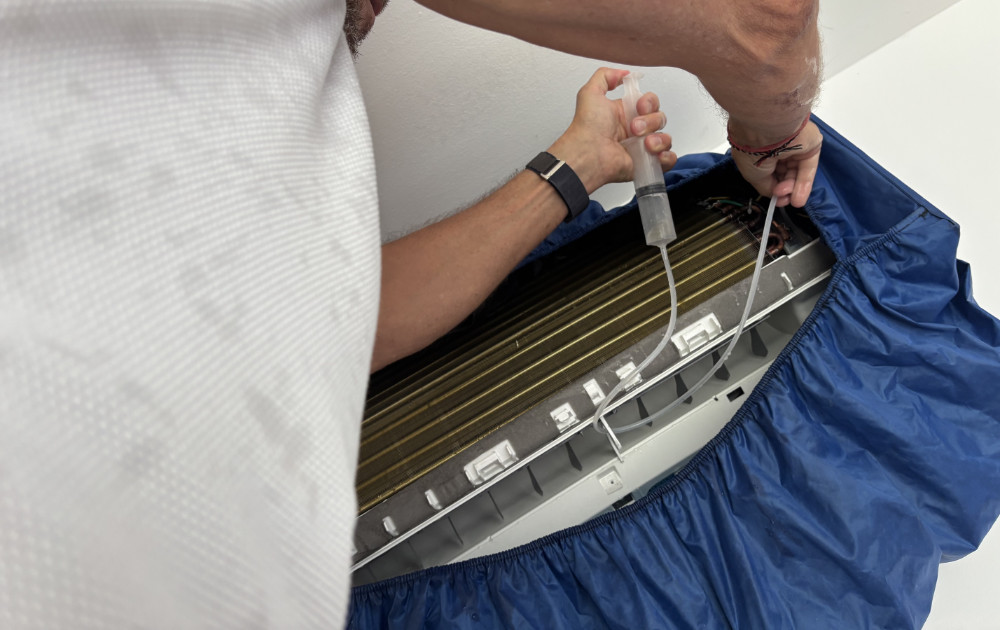
- Application of the chemical. Apply the cleaning and disinfecting solution to the heat exchanger and fan, then let it sit to loosen the buildup.
- Rinse. Rinse the fins and the fan with pressurized water. For the indoor unit, a pressure of 3–5 bar is typically sufficient, and you should not use a higher pressure than this, as the delicate fins can be easily damaged. The contaminated fluid is drained through the bag and hose.
- Drying and assembly. Wipe the surfaces dry, reinstall the filters and the cover, and then run the air conditioner in fan mode.
- Functional test. Finally, check the cooling or heating, airflow, and drainage.
DIY or Professional Air Conditioner Cleaning—Which Should You Choose?
You can easily clean the filters at home; this is part of routine maintenance. However, deep cleaning with chemicals and a washing bag requires the right chemicals, tools, and expertise, so in most cases, it’s best to leave it to us. The table below will help you decide.
| Viewpoint | Cleaning a Home Water Filter | Professional Chemical Air Conditioning Cleaning |
|---|---|---|
| What does it clean? | The dust filter and visible surfaces | The heat exchanger, the cylinder fan, the tray, and the exhaust |
| Removes mold and biofilm | No, just the coarse dust | Yes, the chemical also loosens the buildup |
| Equipment Requirements | Water and a gentle cleaning agent | Laundry bag, air conditioner refrigerant, pressurized rinse agent |
| Risk | Low | Improper installation may damage the slats or the electronics |
| Recommended frequency | Regularly, sometimes even several times during the season | Usually at least once a year |
| Who should do it? | The user | Professional |
Take a look at our air conditioning special offers and request an on-site assessment!
Why is it just as important to clean the outdoor unit?
Proper cleaning of the outdoor unit is just as important as that of the indoor unit. The main concern here isn’t inhaling mold, but rather the buildup of dust, pollen, and the cotton-like seeds of the poplar tree on the heat exchanger. This layer obstructs the free flow of air, causing the air conditioner to operate with a significant loss of efficiency: it consumes considerably more electricity to achieve the same cooling or heating output.
We also use a special cleaning solution for cleaning the outdoor unit. However, high-pressure washing here is performed at a pressure of around 10 bar, unlike the indoor unit, where 3–5 bar is sufficient—and you should not use a higher pressure than that. It is therefore advisable to have the outdoor unit flushed at the same time as the indoor air conditioner is cleaned, so that the system operates as efficiently as possible with lower power consumption.
When should you have your air conditioner cleaned?
There are a few clear signs that it's time for a thorough air conditioning cleaning:
- When you turn it on, you notice a musty, sour, or moldy smell,
- cooling or heating is slower and less effective than usual,
- there was a noticeable decrease in the volume of exhaled air,
- dark, spotty deposits are visible on the fins or fan blades,
- if someone in the household has allergies or respiratory problems,
- Water is dripping from the indoor unit of the air conditioner,
- It has been a long time—typically longer than one season—since a deep cleaning was performed.
What factors determine the cost of air conditioner cleaning?
The cost of chemical air conditioning cleaning varies because it depends on a number of factors. If you request a quote from us, here are some points to keep in mind:
- Device type: Wall-mounted split systems, multi-split systems, cassette units, and ducted units each require different types of installation work.
- Number of indoor units: The time required increases when there are multiple units.
- Level of contamination: A heavily neglected appliance requires more soaking time and rinsing.
- Accessibility: A unit installed in a high or confined space is more difficult to clean.
- Connecting the outdoor unit: Flushing the outdoor heat exchanger is a separate work process.
- Additional services: disinfection, drainage, or pressure testing.
- The location and pickup: Distance and accessibility also play a role.
What are some common misconceptions about air conditioner cleaning?
- „Just rinse out the filter.” The filter only covers the surface; mold forms on the heat exchanger and the fan.
- „A store-bought spray can do the same thing.” The surface spray does not penetrate between the fins, and nothing catches the liquid as it runs off.
- „The new air conditioner doesn't need to be cleaned.” Deposits begin to accumulate starting in the first season.
- „Cleaning will ruin the device.” When performed properly, using the appropriate chemicals and a laundry bag, the process is safe.
- „You only need to do it when it starts to smell.” By the time you notice the smell, the mold is already well advanced; prevention is cheaper.
Frequently Asked Questions About Air Conditioner Cleaning
Chemical deep cleaning is generally recommended at least once a year. In cases of heavy use, pets, smoking, or allergies—as well as in environments with high pollen counts—it may be necessary to clean more frequently. In addition, you should clean the filters regularly throughout the season.
Feel free to clean the filter yourself—it’s part of routine maintenance. However, deep cleaning with a wash bag and chemicals requires the right tools, air conditioning chemicals, and expertise; improper execution can damage the fins or the electronics, so it’s generally best to leave this to a professional.
The price is determined by several factors: the type of unit, the number of indoor units, the level of contamination, accessibility, whether an outdoor unit is involved, and the location. Therefore, you can only get an exact price once the specific indoor unit and location are known; it’s worth requesting a quote.
The time required depends on the type of unit, the level of dirt, and the number of indoor units. A single, moderately dirty wall-mounted split unit can be cleaned more quickly, while multiple units or heavy buildup will naturally take longer.
Yes, it’s just as important as the indoor unit. Dust, pollen, and the cotton-like seeds of the poplar tree accumulate on the outdoor unit’s heat exchanger, which obstructs airflow; as a result, the air conditioner consumes significantly more electricity to achieve the same performance. We use a special cleaning solution for flushing, typically at a pressure of around 10 bar, and when ordered together with indoor unit cleaning, we ensure comprehensive maintenance of the entire system.
Request a professional air conditioning cleaning service
If you notice a musty odor, reduced cooling performance, or spotty buildup, don’t wait until mold starts to grow. Let us handle the chemical and filter-bag air conditioner cleaning, and enjoy clean, healthy air again. Get in touch with us!
 English